a
They Are Teaching You to Fear the Trans Community

They Are Teaching You to Fear the Trans Community

Look at the screenshots accompanying this article. Different people. Different posts. Seemingly different topics: bathrooms, schools, children, women’s rights, safety, privacy, fairness, protection.

What do they all have in common?

Maybe you caught it immediately. Maybe you didn’t. Either way, I need you to see it now, because once you do, an enormous amount of what passes for “debate” about transgender people starts looking very different.

You are being taught to fear trans people.

Story after story places transgender people next to the same emotional triggers: danger, children, women, invasion, deception, unfairness, loss, threat. A trans woman uses a bathroom, and somebody else’s privacy is supposedly at risk. A trans teacher goes to work, and children are being “exposed” to something. A trans athlete becomes evidence that women’s sports are under attack. A trans child becomes evidence that their parents are groomers.

The details change, but the underlying lesson remains the same: there is something you value, and trans people are threatening it.

That is why, this September, Sisterhood Not Cisterhood is joining Trans Empowerment Project’s #LouderWithLove campaign to teach people how to recognize these patterns, understand why they work, and interrupt them. Suicide prevention includes changing the environment people are being asked to survive in long before somebody reaches a crisis point.

Once you see the pattern, you start seeing it everywhere

There is a well-established phenomenon in psychology called the illusory truth effect. In plain language, repeated information tends to feel more credible and familiar than information we encounter only once. Research has found that repetition can increase belief in misinformation even when claims initially seem implausible or contradict things people already know.

Think about what that means in practice. You see a story about a trans woman in a bathroom. Then a story about a trans athlete. Then a story about a trans prisoner. Then a teacher. Then a child. Then a trans woman accused of a crime. Then another bathroom, another athlete, another school board meeting. Nobody has to put a giant graphic on your screen saying TRANS PEOPLE ARE DANGEROUS, because the association is already being built for you.

Protection language makes that association especially powerful: protect women, protect children, protect privacy, protect fairness. It gives us someone to care about while quietly telling us who we should fear.

One of the screenshots that pushed me toward this campaign involved a transgender elementary-school music teacher. Adults described a “biological male music teacher who presents as a woman,” scrutinized her clothing and makeup, and centered a child who reportedly felt uncomfortable around her. Strip away all of that framing and ask the question I want you to start asking every time you encounter one of these stories: What did the trans person actually do?

Children are extraordinarily capable of accepting new information about the world around them. A child who encounters a transgender teacher can simply be told that some people are transgender, people come in all kinds of bodies, and this woman is her music teacher. On the other hand, adults can also teach that child that she is looking at a “man in a dress,” that something deceptive or inappropriate is happening, and that children should have been protected from seeing her. 

If adults teach a child that a particular kind of person is dangerous, they cannot then point to the child’s resulting fear as proof that they were right.

The same question matters when a trans person actually does something harmful. We should absolutely hold that individual accountable. But cisgender people commit crimes every day without every other cis person being required to establish why they should still be allowed near bathrooms, schools, or children. An entire community does not owe us collective innocence in exchange for being allowed to exist.

Cis women, they’re doing this in our name

For cis women in particular, I need us to notice how often we are told trans people are taking something from us: our bathrooms, sports, privacy, safety, language, even the word woman itself. That framing turns another woman’s inclusion into our loss.

I am one of the women these people keep claiming to protect, and they do not speak for me. My womanhood does not shrink because a trans woman’s womanhood is recognized. I don’t become less safe because she is safe. My privacy does not require her humiliation, and my rights do not become stronger when hers become weaker.

You don’t protect me by hurting her.

Sisterhood Not Cisterhood exists because I refuse to accept the premise that cis women and trans women belong in opposing camps. When someone says, “We don’t want trans women in our bathrooms,” cis women can answer: You don’t speak for me. 

In fact, we need to be doing that.

We also need to understand where policing womanhood leads. Cis women have already been questioned, investigated, and confronted because they looked too masculine, had facial hair, muscular bodies, deep voices, or simply failed somebody else’s visual inspection of femininity. I have personally known cis women who were approached and intimidated in restrooms because a stranger assumed they were transgender.

Stop for a second and think about how profoundly messed up that is.

When did we decide strangers should be entitled to inspect another woman while she is trying to use the bathroom and determine whether her body sufficiently proves her right to pee? Once we empower people to decide which women look suspicious enough to investigate, every woman who falls outside somebody’s personal template of femininity becomes potentially inspectable.

You do not make women safer by empowering strangers to police their bodies.

We need to talk about where this can lead

Anti-trans rhetoric routinely describes transgender people as deceptive, dangerous, predatory, mentally ill, fraudulent, or inappropriate around children. Psychological research on dehumanization gives us good reason to take that seriously: dehumanization has consequences for empathy, moral judgment, social exclusion, aggression, and what treatment of another group people become willing to tolerate.

And yes, we need to talk about genocide. I know what happens when that word enters a conversation. People get uncomfortable. They worry that saying it is too extreme. They start reaching for reassurance that things could never really get that bad.

I am not going to give you that reassurance.

In February 2025, the Lemkin Institute for Genocide Prevention and Human Security warned that actions by the United States government were “in line with a genocidal process against the transgender community” that it said had been developing for more than a decade. Four months later, the Institute issued another Red Flag Alert warning that the process had “rapidly escalated.”

Genocide Watch identifies discrimination, dehumanization, polarization, and persecution among the processes societies should recognize and interrupt before mass violence reaches its worst possible endpoint. We should therefore be willing to sit with something terrifying: genocide is a possible outcome of unchecked anti-trans dehumanization, political scapegoating, discrimination, and state repression.

We do not know what the endpoint of the current trajectory will be. We do know that organizations whose work centers genocide prevention have looked at what is happening to trans people and sounded alarms using the language of genocidal process, escalation, and erasure.

That should scare us.

The answer to an early warning is not to keep sanding down the language until everybody feels comfortable again. History does not become history only after the bodies are counted. Every atrocity had a period when ordinary people could still tell themselves that surely it would never go that far. 

Trans people are telling us they are frightened. Genocide-prevention institutions are sounding alarms. Governments are restricting healthcare, legal recognition, and participation in public life while the surrounding culture increasingly portrays trans people as threats to children, women, and society.

We do not need to know exactly how far this will go before deciding that our job is to stop it from going farther.

Less than three weeks ago, I experienced the hate first-hand

Less than three weeks ago, on my birthday, I made a Facebook post criticizing J.K. Rowling. I expected roughly the same audience most of my personal posts receive: a few friends, maybe a handful of reactions, and then Facebook would quietly bury it with everything else I post. After I made the post, I put my phone down and continued celebrating my birthday.

The next morning, I woke up to a pile of notifications. At first, I genuinely thought they were belated birthday messages or something of the sort.

They were very much not birthday messages.

My post had escaped my normal little corner of Facebook. It had been shared repeatedly, and hundreds of strangers were suddenly in my comments. Before I understood how large the pile-on had become, I laughed at a few of them. I even responded sarcastically to some. I have been online a long time, and a few random a-holes calling me something stupid is not particularly novel.

Then I saw how many comments there were, and I started reading. And reading. And reading.

The screenshots are still on my phone. I can still remember some of the comments almost word for word. These are not scars I have spent years polishing into a nice little story about resilience. I remember waking up expecting to continue my birthday celebrations through the weekend and feeling my mental health deteriorate in real time as I realized what hundreds of strangers were saying about me.

They attacked my body, appearance, intelligence, mental health, sexuality, and politics. They questioned whether I was a woman. They used slurs and normalized violence. Some echoed things previous abusers had said to me, and every comment became another tiny cut.

Somehow, they also started attacking me over trans people. I hadn’t mentioned trans people, bathrooms, sports, trans kids, pronouns, or gender-affirming care. I criticized J.K. Rowling, and the hate machine supplied everything else.

In less than 24 hours the number of comments had exceeded 700, and I wasn’t laughing anymore. I had expected to spend the weekend celebrating my birthday and instead ended up in a severe mental-health crisis. My husband eventually restricted the comments, deleted some of the worst ones, got me away from social media, and spent his time reminding me of all the things about myself that strangers had spent the day trying to make me forget.

I had support. I knew those people were wrong. I am a cis woman whose womanhood has never been questioned by society, and it still hurt like hell. I had spent years watching this machinery operate against trans people; Sisterhood Not Cisterhood exists because I already understood the harm. What those few days gave me was a visceral understanding of what hundreds of tiny cuts can do even when you know the knife is made of lies.

And I couldn’t stop thinking about trans people who experience this simply because they exist in public.

This is a suicide-prevention issue

The Trevor Project’s 2025 U.S. National Survey found that 86% of transgender and nonbinary young people surveyed had noticed harmful rhetoric about LGBTQ+ people during the previous year, and 40% had seriously considered suicide. Across LGBTQ+ young people, those who experienced in-person or online bullying reported attempting suicide at more than three times the rate of those who had not been bullied.

Trans identity does not inherently make somebody suicidal. People live inside environments, and rejection, discrimination, victimization, belonging, and support are part of those environments. Suicide prevention has to begin before somebody is already drowning by asking what kind of water we are making them swim through every day.

That brings me to those of us who call ourselves allies.

I need more from allies

I know plenty of people who support trans rights. They buy the shirt, share the Pride graphic, put the flag in their bio, and tell you they love their trans friends. I know far fewer cis people who regularly speak publicly about trans inclusion.

There is always a reason. They’re busy. They’re afraid of saying the wrong thing or being corrected. They don’t want to speak over trans people. They don’t want to confront their relatives. They definitely don’t want the Facebook mob turning toward them.

At some point, fear of doing allyship imperfectly becomes an excuse for not doing it at all. 

Trans people are already expected to explain terminology, debunk misinformation, defend their healthcare, answer invasive questions, educate relatives, and confront people questioning their humanity. Those of us who call ourselves allies need to absorb more of that cost.

You might get corrected; then learn something and keep going. You might phrase something badly; fix it and keep going. Somebody might get angry that you spoke up. Keep showing up anyway.

Trans people themselves have told researchers that standing up for them matters. In Trevor Project’s research on supporting transgender and nonbinary young people, 85% identified “standing up for me” as something people in their lives could do to make them feel supported.

That is part of what #LouderWithLove is asking us to learn how to do. Sometimes showing up means correcting misinformation. Sometimes it means reporting abuse, documenting a threat, checking in privately, or offering to moderate somebody’s comments so they don’t have to read another hundred insults. Sometimes it means filling a comment section with enough humanity that the person being attacked can see the mob does not represent everybody.

And sometimes, especially for cis women, it means saying two very simple things:

You don’t speak for me. You don’t protect me by hurting her.

What I actually want

When I imagine what success looks like for Sisterhood Not Cisterhood and #LouderWithLove, I think about freedom. I want trans people to feel comfortable existing publicly without constantly calculating what it might cost them.

I want a trans woman to post the photo, wear the bikini, ask for makeup tips and proudly show how much she has learned. I want her to wear the dress with the frilly skirt, share the stupid meme, celebrate the haircut, talk about a terrible date, complain about work, be glamorous, be awkward, be loud, be shy, and be completely ordinary.

I want trans people to know that when somebody decides their ordinary existence is an invitation for cruelty, they will not automatically become responsible for educating, correcting and fighting every stranger who shows up. I want them to look at their comments and see allies already there. I want to see one hundred affirming comments for every hateful one.

I want #SNC to become a calling card. When somebody sees it beneath a supportive comment, I want them to know that somebody from Sisterhood Not Cisterhood is there. Our members should recognize each other and understand the assignment: support the person being targeted, add affirmation, report abuse where appropriate, offer help, and refuse to let hate occupy the entire space uncontested.

We are not building a mob to attack another mob, we are building a community of people who know how to make sure the person being hurt doesn’t have to stand there alone. 

Trans people deserve to walk into a bathroom without wondering whether somebody will challenge them. They deserve to teach music without becoming a school-board controversy. They deserve to be teenagers whose biggest problem that day is an algebra test. They deserve the same boring, beautiful, messy freedom to exist that the rest of us expect for ourselves.

And those of us who really mean it when we call ourselves allies can help build that world.

Learn to see it. Then learn to interrupt it.

Over the next several weeks, Sisterhood Not Cisterhood and #LouderWithLove are going to dig deeper. We’ll teach the patterns that make anti-trans rhetoric effective, explain the psychology underneath them, and build practical tools for people who want to move from quietly supportive to actively useful.

For now, start paying attention. When you see a story involving a trans person, ask what actually happened before accepting somebody else’s framing. Notice who supposedly needs protection and who has been assigned the role of threat. Notice when one person’s actions become evidence against an entire community. Notice when somebody claims to speak for all women.

When somebody is targeted, show up. When you make a mistake, learn and come back. When a trans person tells you what support would help, listen. When hate gets repeated until it becomes familiar, help make love feel familiar too.

Make cis women standing beside trans women familiar. Make parents affirming trans kids familiar. Make trans teachers and trans neighbors familiar. Make trans joy familiar. Make seeing allies in the comments familiar. Make it so ordinary that trans people don’t have to keep wondering whether anybody is going to show up for them.

Want to keep going?

This article is only the beginning. Throughout September, we’ll be turning these ideas into practical tools you can actually use — including the “Learn to See It” downloadable guide, real-world examples and practice, and a live training on recognizing and interrupting anti-trans hate.

The best way to make sure you don’t miss any of it is to join our email list. We’ll send you the guide when it drops, the invitation to the live training, and the major resources from this campaign.

Want to talk about what you’re learning, bring us examples you’ve encountered, or practice alongside other people? Join the Sisterhood Not Cisterhood Facebook group. That’s where the conversation (and eventually our community bystander-support work) will live.

You don’t have to become an expert overnight. Just stay with us. Learn to see it. Learn to interrupt it. And when someone needs you, show up.

They are teaching people to fear the trans community. We are going to teach you to see how. And then we are going to teach you how to get #LouderWithLove. 

Sources

Udry, J. & Barber, S. (2024). The illusory truth effect: A review of how repetition increases belief in misinformation. Current Opinion in Psychology. ScienceDirect

Haslam, N. & Loughnan, S. (2014). Dehumanization and Infrahumanization. Annual Review of Psychology. Annual Reviews

Genocide Watch. The Ten Stages of Genocide. Genocide Watch

Lemkin Institute for Genocide Prevention and Human Security. (2025). Red Flag Alert for the Anti-Trans Agenda of the Trump Administration in the United States. February 2025 alert; Red Flag Alert 2 for the Anti-Trans Agenda of the Trump Administration in the United States. June 2025 alert

The Trevor Project. (2026). 2025 U.S. National Survey on the Mental Health of LGBTQ+ Young People. National Survey; How to Best Support Transgender and Nonbinary Young People. Research Brief

Home for the Holidays: 10 Things You Can Do To Show Up For Your Trans Loved Ones

Home for the Holidays: 10 Things You Can Do To Show Up For Your Trans Loved Ones

10 Things You Can Do To Show Up For Your Trans Loved Ones

The holidays are rolling in again — twinkly lights, sweater weather, and that one cousin who insists on “playing devil’s advocate” even though nobody asked. For many Two-Spirit, Trans, Intersex, and Gender-Expansive (2TIGE) folks, this season can feel like a mixed bag: joy, anxiety, celebration, and the ever-present question of whether family gatherings will feel welcoming or…something less than that.

If someone you love is 2TIGE, the way you show up can make the difference between a holiday that feels safe and affirming, or one that they spend silently bracing themselves. The good news? Being a supportive, thoughtful ally isn’t complicated. It just takes intention, humility, and a willingness to prioritize their comfort over anyone else’s convenience.

Here are ten ways to show up with real love, respect, and solidarity this holiday season — and beyond.

1. Use Their Name and Pronouns (Yes, Every Time!)

Affirming someone’s name and pronouns is the foundation of showing respect. If your loved one has shared theirs with you, use them consistently, even when you’re reminiscing about childhood stories or talking to relatives who “don’t get it yet.” If you’re unsure of their pronouns or how they introduce themselves these days, ask ahead of time instead of guessing.

Singular “they” is not new, confusing, or grammatically rebellious. You’ve used it your whole life. If you can say “Someone left their casserole on the counter,” you’re already doing it. It’s not about perfection; it’s about practice and commitment.

2. Check In Ahead of Time and Do Your Own Learning

Before the gathering, reach out and ask how they’re feeling about the holiday and what would help them feel supported. Maybe they want you to correct people gently on their pronouns. Maybe they want backup around certain relatives. Maybe they just want a neutral, judgment-free space to exist.

Whatever they share, honor it,  and then take responsibility for your own education. If they seem open to talking, great. If not, don’t treat them like a walking encyclopedia of transness. The emotional labor of explaining themselves shouldn’t fall on them just because you’re curious. You can learn plenty from vetted resources (and you’ll find some below).

3. Don’t Ask Questions You Wouldn’t Ask a Cis Person

This one’s simple: if you wouldn’t ask a cisgender friend or family member a particular question, you shouldn’t ask your trans loved one either. Curiosity is normal, but bodies, medical decisions, and personal details are private. Questions like “Have you had surgery?” “What’s in your pants?” or “Which bathroom do you use?” are inappropriate, invasive, and irrelevant to who they are as a human being.

Respect their boundaries the same way you’d want yours respected.

4. Rethink Gendered Traditions

Families often have deeply ingrained gendered roles during the holidays: the women cook, the men watch football, or gifts are exchanged “by the boys” and “by the girls.” These traditions can feel alienating or painful for trans and non-binary relatives.

If your loved one is a trans man or trans woman, include them wholeheartedly in traditions that match their identity, versus ones assigned to them at birth. If they’re non-binary, talk with them about what feels comfortable or brainstorm new traditions together ahead of time. Safety and inclusion matter more than nostalgia.

5. Tell Old Stories the Right Way and Be Careful with Photos

Stories of childhood mischief and awkward middle-school moments can be sweet, but retelling them requires a little extra care. Use your loved one’s current name and pronouns when sharing memories. There’s no need to call in memories with language like “when you were a boy/girl”. These story still land without that kind of framing. Instead try something like “When you were younger”.

Photos are trickier. Some 2TIGE people enjoy looking back at old pictures; others find them dysphoric or painful. Always ask privately before pulling out old albums, passing around pre-transition pictures, or posting anything online. Even well-intentioned nostalgia can cross a boundary without meaning to.

6. Remember: Their Story Is Theirs to Share

Just because your loved one came out to you does not mean they’ve come out to everyone else in their life. They may not be out at work, school, church, or within certain parts of the family. Outing someone (even accidentally) can put them at risk socially, professionally, and in today’s climate, sometimes physically. Ie- just because you’re cool, doesn’t mean everyone else at the table is or will be. 

Let people control their own narratives. If someone asks a question that you’re unsure how to navigate, try redirecting instead of revealing information that isn’t yours to disclose. 

(Example: Your Trans loved one leaves the room, and suddenly Aunt Susan wants to know about their surgery status, you don’t need to give her a play by play, instead allow your Trans loved one to decide if/when they want to share that story and redirect the conversation to a favorite memory or anything else. If she or anyone else persists, it’s okay to be direct and let them know that that is not your story to share.)

7. Give Gifts That Celebrate Who They Are, Not Who You Assume They Should Be

Buying gifts for a newly out 2TIGE loved one doesn’t have to feel intimidating. The best strategy is the simplest: ask them what they want. Maybe they’re building a new wardrobe, exploring skincare or makeup for the first time, or trying out new hobbies or styles. They may also appreciate something fun, silly, comforting, or nostalgic (especially things they were denied growing up due to gendered expectations).

The goal isn’t to “get it perfect.” It’s to choose something that creates joy and says: I see you.

8. Stand Up to the Problematic Relative(s) – You Already Know Exactly Who We’re Talking About

Almost every holiday table has that one person who refuses to adjust, makes snide comments, misgenders people “on principle,” or wants to debate human rights like it’s fantasy football. Your loved one shouldn’t have to defend themselves alone.

Being an ally means stepping in; Calmly, confidently, and consistently. You don’t need to be confrontational to be firm. A simple “We’re using their correct name,” or “Hey, that’s not respectful,” is more powerful than you think. When allies speak up, 2TIGE people don’t always have to carry that burden themselves.

Allyship is a verb. Practicing it shows that you mean what you say.

9. Prioritize Their Comfort Over Your Discomfort

It’s okay if using new pronouns feels unfamiliar at first or if you’re nervous about correcting others. What’s not okay is putting the weight of your feelings onto your 2TIGE loved one. Their comfort, safety, and humanity are not optional because you feel awkward or uncertain.

If you care about them, truly care, then yes, stretch! Try new things. You’re going to get braver and things will get easier. That’s part of loving someone who needs you in their corner.

Their safety is more important than anyone else’s discomfort. Full stop.

10. When You Mess Up (And You Will), Fix It and Move Forward

No one expects perfection. What matters is how you respond. If you use the wrong pronoun or name, correct yourself quickly, apologize once, and move on. Don’t make a scene, spiral, or demand reassurance. Your loved one shouldn’t have to comfort you for a mistake you made.

The most respectful and authentic apology is changed behavior — not theatrics, not self-flagellation, and not turning your error into an entire holiday subplot.

After the Holidays: Keep Showing Up

Support doesn’t end when the decorations get boxed up. Keep checking in. Keep learning. Keep standing up when you need to. And most importantly, keep celebrating your loved one outside of crisis moments or visibility days. Trans people deserve ordinary joy, everyday safety, and people who stick around long after the holidays fade out.

Further Resources to Grow Your Allyship:

Trans Empowerment Project
InstagramFacebook

Liberation Lab – TEP’s training platform
24/7 access to our self-paced allyship learning platform.
Trainings include:

Trans 101 • Sisterhood, Not Cisterhood • Supporters, Not Saviors • Centering Disabled BIPOC 2TIGE Lives

Sisterhood Not Cisterhood
A growing community and learning space for women (and our allies!) committed to practicing real, inclusive sisterhood.

Microgrants Donate to help us provide quarterly micro-grants. TEP’s micro-grants provide support for community members who need it the most.

Embracing All Shades of Womanhood: Getting “Louder With Love”

Embracing All Shades of Womanhood: Getting “Louder With Love”

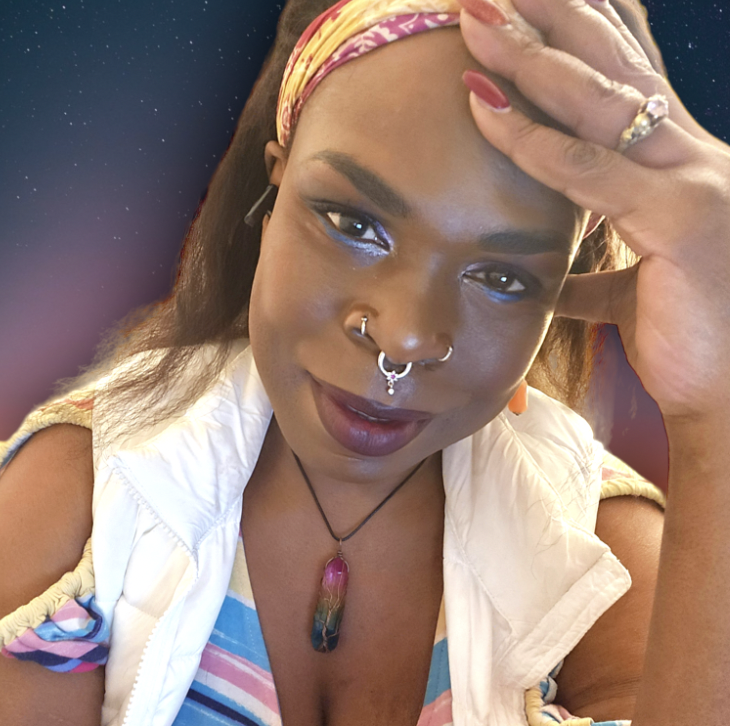
By: Heather Knoxville (she/they)

In a world that too often echoes with division, Trans Empowerment Project (TEP) hopes to stand as a beacon of unity and love, especially through our transformative “Sisterhood Not Cisterhood” program. As we encourage folks to join our newest campaign, “Louder With Love,” it’s a poignant time to reflect on what it means to truly celebrate womanhood in all its diversity.

As I personally reflect on “Louder With Love” and the growth of the Sisterhood Not Cisterhood program, I am reminded of the many women I’ve interacted with at conferences and workshops – women who are learning how to be better, more intersectional allies; women who are finding themselves, claiming their power, and learning how to lead (and when to follow other leaders); women who are getting out of their comfort zones to try and make the world a better place, even with everything else they carry. 

These are trans women, cis women, BIPOC women, disabled women, white women – all coming together to learn from one another and to build community together. I am in awe of these women, and it has been a pleasure to teach and learn alongside them. Never have I seen “sisterhood” exemplified more than in these spaces, where egos are put aside, and minds are open to learning and, more importantly, hearing. 

The Power of Inclusive Sisterhood

At the heart of our Sisterhood Not Cisterhood program is a simple yet profound belief: every woman deserves recognition, celebration, and empowerment. Here’s why inclusive sisterhood is not just important but essential:

  • Unity in Diversity: Our strength lies not in our sameness but in our diversity. By embracing every woman’s unique experiences and perspectives, we build a more resilient and compassionate community.
  • Breaking Barriers: Historically marginalized groups, including 2TIGE ( 2 Spirit, Trans, Intersex, and Gender Expansive), disabled, and BIPOC communities, have faced systemic barriers to empowerment and recognition. Inclusive sisterhood seeks to dismantle these barriers, ensuring that every woman has the opportunity to thrive.
  • A Larger Community: When we stand together, the community of women isn’t just big; it’s boundless. United, there’s no limit to the change we can enact and the futures we can build.

This actually reminds me of a t-shirt my husband bought for me that says, “Our world needs women who are dangerously awake, fully alive, and unified in heart and purpose.” That rings so true for me, especially right now. Our world feels like it’s on fire, but if we wake up and work together instead of letting ourselves be divided, we can build a world where everyone thrives – that is the purpose we need to be unified under, and we need to be loud about it.

(BTW, you can get one of those t-shirts for yourself from Mahogany Mommies…no affiliation with us, they just make some really cool stuff)

Louder With Love: Why It Matters

The “Louder With Love” campaign is more than a slogan; it’s a call to action. In an age where dividing lines are drawn too quickly and hate can spread with a click, choosing love is a revolutionary act. Here’s how we can all get “Louder With Love”:

  • Drown Out Hate: Every act of love, big or small, has the power to silence messages of hate. Whether it’s through words of support, acts of kindness, or standing up for one another, love is our most potent weapon. Perform a random act of kindness today – and remember to check on your 2TIGE and BIPOC friends; this world is heavy right now.
  • Disrupt the Doom Scroll: In the relentless cycle of negative news and social media toxicity, it’s easy to feel despair. But by amplifying positive stories, achievements, and moments of unity, we can change the narrative together. Make a positive post of your own using our #LouderWithLove hashtag and challenge 3 friends to do the same, or use our customizable social media toolkit for sample posts. 
  • Build a Future on Love: Our dreams for the future are built on the foundation we lay today. By fostering an environment of love and support, we make it possible for every woman to achieve her full potential.

Together, We Are Unstoppable

The message of “Sisterhood Not Cisterhood” and the “Louder With Love” campaign is clear: our love for each other must be louder, stronger, and more enduring than any forces that seek to divide us. It’s a reminder that together, we’re not just a community; we’re a force for change.

As members of the TEP family, whether you’ve been around for a while or you’re just getting here, you’re part of this beautiful, ongoing movement of empowerment and unity. Let’s stand together, louder with love, and show the world the incredible power of inclusivity and unwavering solidarity. 

Looking ahead to a year that is sure to be fraught with tension and repeated attempts at dividing our country, I’m filled with hope and determination because I’ve seen firsthand how collective efforts can weave a tapestry of support and belonging. My pledge this year is simple, but resolute: I will be louder with love, in words and in action – and I hope you’ll join me. 

Together, there’s no doubt in my mind that we can build a future where every person, in all their unique glory, is celebrated and empowered to thrive. 

Learn more about #LouderWithLove

Celebrating Women’s History Month: Women Are Making History Today

While my Trans identity is only a part of who I am and does not define me, my womanhood does. So, I adamantly refuse to be excluded from conversations about women’s issues; all women, regardless of their background or identity, deserve a seat at the table

Jacquii Cooke

Client Success Manager, Trans Empowerment Project

Jacquii Cooke

Jacquii Cooke

Client Success Manager

March marks a time of celebration and reflection as we commemorate Women’s History Month. It’s a time to acknowledge and honor the remarkable contributions of women, past and present, who have shaped our world in countless ways. As we pay tribute to these achievements this year, it’s crucial to recognize and uplift ALL women, especially our Trans-femme siblings. We are making history TODAY!

I’m Jacquii Cooke–Client Success Manager for Trans Empowerment Project (TEP). As a 48-year-old Trans woman myself–having proclaimed my womanhood at the age of seventeen–I have endured the harsh realities of blatant misogyny, workplace discrimination, sexual harassment, and the many struggles women face on a daily basis. 

The words of black Trans icon Dr. Lourdes Ashley Hunter resonate with my spirit as she says, “I don’t want to be visible because I am trans. I want to be seen, affirmed and celebrated as a whole damn person… [I want to] thrive in a world that celebrates all of who we are… Humans.” While my Trans identity is only a part of who I am and does not define me, my womanhood does. So, I adamantly refuse to be excluded from conversations about women’s issues; all women, regardless of their background or identity, deserve a seat at the table. 

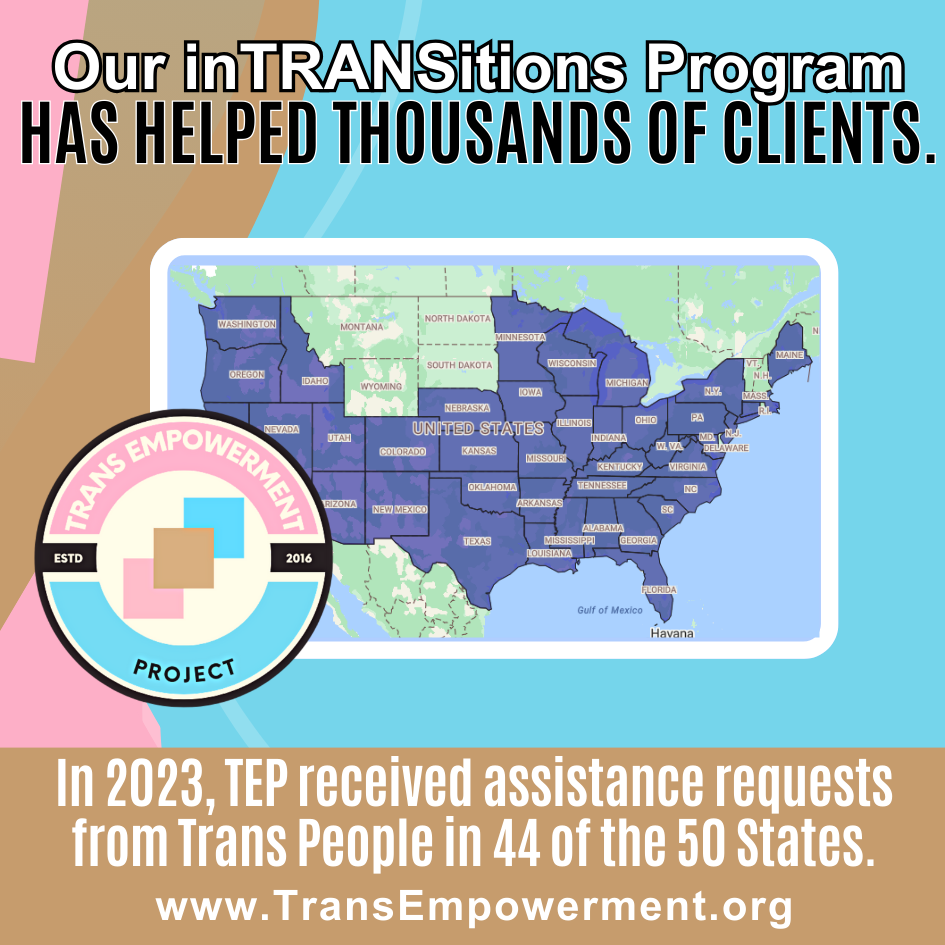
Being an advocate for the 2TIGE (Two-Spirit, Transgender, Intersex, and Gender-Expansive) community is a title I also proudly claim. I have had the privilege of getting to know and assisting hundreds of clients from 44 states in the US who are working hard to overcome disproportionate amounts of personal trauma, criticism, bias, and unjust legislation. In 2023, TEP took a significant step forward by providing ~$25,000 in direct aid through our inTRANSitions Program. 

Stats about our work

The inTRANSitions initiative aims to empower all our 2TIGE clients in need, 40% of whom are Trans women and Trans-femme individuals from diverse backgrounds. By providing programs like inTRANSitions, TEP is not just offering food & toiletries deliveries, access to HRT, gender-affirming items, and much more. We’re creating pathways for empowerment and inclusivity!

This Women’s History Month, let’s celebrate women’s achievements, resilience, strength, and courage by committing to ongoing action and support. Let’s continue this momentum and strive for greater joy, celebrating each other’s triumphs as we thrive together in sisterhood, not CISterhood.

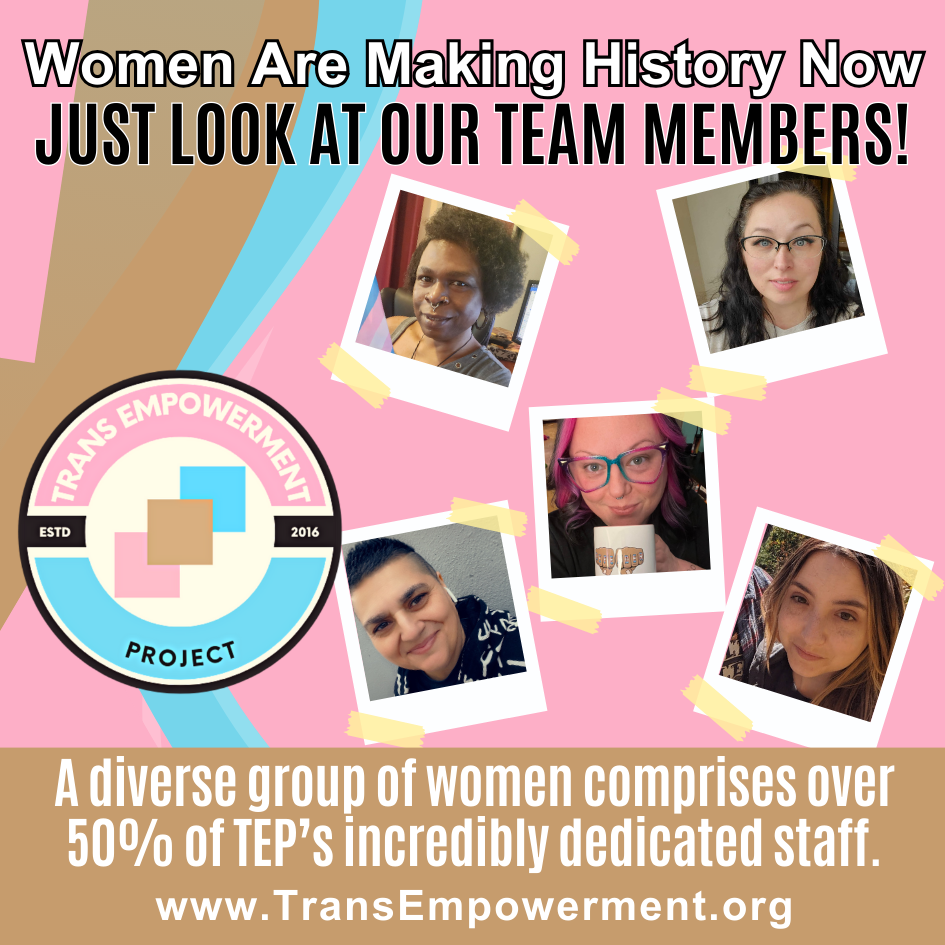
As we look to the future, let’s recognize that women are making history now. Because we are! In fact, over 50% of TEP’s amazing staff is managed by a talented, passionate, diverse group of women dedicated to advocating for our community. Please excuse my language when I say that we are a group of badasses who are kicking some major ass fighting for our community’s right to exist joyfully! We’re changing the narrative on the disinformation floating about, building bridges of inclusion among all women, and helping our community accomplices become captains of organizing in their local communities. My colleagues and I are doing impressive work and are doing our part in defining history by helping to create a better tomorrow!

And we can continue making history when we work together to create a more equitable and empowered society. Whether through financial donations, volunteer work, community organizing, or simply spreading awareness, every action counts. So let’s join hands in solidarity, writing new chapters in history daily–chapters where everyone’s voice is heard, valued, and celebrated.

Your contribution to TEP’s inTRANSitions program directly supports this mission, enabling us to create lasting change and opportunities for 2TIGE folks in need. To make your charitable contribution directly to TEP’s inTRANSitions program and be a part of this transformative revolution, visit our donation page. Today, a contribution. Tomorrow, you will have made all the difference! You can also create your own fundraiser on Tiltify and share it with your trans-affirming family, friends & colleagues! Complete directions on how to do so can be found online at https://tiltify.com/trans-empowerment-project. Let’s continue to write history together, one act of empowerment at a time.

Safety Exit